Sebagaimana setiap produk kebudayaan dan peradaban, maka sains sebagai sebuah produk peradaban tetap akan membawa nilai-nilai di mana ia tumbuh. Ketika sains dan teknologi yang telah tumbuh dalam nilai-nilai yang tidak Islami dikembalikan ke Islam, maka Umat Islam harus bisa melihat perbedaan antara sains dengan kandungan nilai-nilai di mana ia tumbuh dan mendudukkannya kembali dalam kerangka pandangan dunia Islam. Berikut sebuah artikel yang ditulis oleh seorang cendekiawan muslim dari Perancis yang sekaligus seorang Pakar Sains yang dihormati. Di sini penulis Blog ini akan mencoba menerjemahkan apa adanya gagasan pengarang, selanjutnya penulis akan memberi komentar di mana perlu sehingga gagasan pengarang asli akan semakin diperkaya dan dikontekstualkan, dalam tradisi Islam ini disebut sebagai Komentar atau Syarah.
Tradisi Syarah dalam Islam sebenarnya adalah salah satu khazanah kesarjanaan Islam yang penting untuk terus dikembangkan. Oleh karena itu apa yang penulis lakukan dalam Blog ini dengan banyak memberi syarah terhadap berbagai ulasan kesarjanaan dan ilmiah bertujuan untuk terus mengembangkan dan menghidupkan tradisi syarah tersebut walaupun dalam skala yang jauh dari yang diharapkan mengingat keterbatasan wawasan penulis sendiri.
Tradisi syarah meskipun dewasa ini ada yang mulai mengkritisinya, namun dalam hemat penulis tradisi syarah bukanlah tanda kemacetan ide. Justru tradisi syarah terhadap kitab-kitab menunjukkan keunggulan dari tradisi Islam yang memandang "kebenaran-kebenaran kunci" bukan sesuatu yang terus dicari karena belum ditemukan. Ide-ide tersebut dalam Islam tidaklah dicari dalam proses spekulatif dan imajinatif yang terus menerus. Semangat sekularisme telah membuat banyak cendekiawan muslim kontemporer meniru atau setidaknya terpengaruh oleh elemen metafisika Barat. Di dalam metafisika barat dan sikapnya terhadap kebenaran kunci, kesempurnaan kebenaran selalu dalam proses tidak matang, selalu dalam proses kemenjadian dan diwarnai pembrontakan terhadap tatanan dan ide-ide lama (pengaruh ini sangat jelas sebagaimana ditunjukkan ide kaum modernis liberal karena mengekor terhadap kebudayaan barat).
Namun dalam Islam kebenaran kunci telah ditemukan dalam sains suci kewahyuan dan tinggal kita menjabarkannya dalam tradisi profetik serta dealektika peradaban. Sehingga kebaruan hanyalah proses dealektika menyegarkan ingatan akan kebenaran kunci yang telah diwartakan oleh Yang Maha Tinggi dalam uraian kewahyuan, bahkan untuk asfek-asfek yang profan sekalipun.
Arena tajdid dalam pemikiran Islam juga bukan berarti kedurhakan terhadap wawasan lama dari para ulama pendahulu sebagaimana sering ditampilkan oleh kalangan modernis muslim yang setidaknya selalu memandang penuh kecurigaan terhadap hasil karya dan pemikiran ulama-ulama abad pertengahan sebagai biang dekadensi yang mengarahkan ke fatalistik dan kemandegan kemajuan. Tindakan tidak bijaksana mereka lainnya adalah memandang warisan intelektualitas ulama pertengahan ini tidak murni dan bid'ah sehingga perlu dimurnikan di sana sini agar kejayaan Islam kembali tampil dan dapat mengalahkan kebudayan Barat sekuler yang mereka pandang telah mencapai "kesempurnaan". Mereka menuding kemunduran umat Islam karena umat Islam semakin jauh dari tuntunan dan jalan yang lurus sehingga dipandang penting untuk merubah "kompas waktu" dan membuang "segala beban", sehingga lahirlah mereka bagaikan seorang anak yang memandang enteng "bapaknya" dan mengklaim cuma lahir dari "lubang bambu".
Dalam Blog ini penulis selalu menekankan Tesis penulis, bahwa sebab musabab sindrom serba mengejar "ketertinggalan" terhadap tamaddun Barat ini berangkat oleh mentalitas inferior dan silau oleh kemajuan material dunia sekuler. Pukulan paling telak adalah akibat "bodoh" dan "tanggungnya" penguasaan mereka akan sains dan teknologi. Celakanya ketika mereka "dikalahkan" dalam sains teknologi, mereka justru dalam kepanikan membakar warisan paling berharga dari orang tua dulu dan menduga dengan membuang semua harta tak ternilai tersebut mereka telah siap kembali kepada "islam yang murni" dan siap tempur dalam kancah pertrungan peradaban,...padahal mereka hanya membuang sisi yang terbaik dari mereka alih-alih mereka memperbaiki apa yang kurang pada diri mereka. Alih-alih menguasasi sains teknologi dan fokus akan ketertinggalan dititik ini, mereka justru membakar habis warisan ruhani yang luar biasa dari ulama pertengahan yang merupakan puncak tertinggi buah tamaddun Timur yang begitu fokus pada "intuisi dan iluminasi ruhani" demi mengejar capaian lain dari manusia barat buah pengaktifan mereka akan "akal rasional dan eksperimental. Pepatah yang tepat untuk generasi yang seolah lahir dari "lubang bambu" ini adalah "karena harap burung terbang Punai di tangan dilepaskan". Oleh karena itu dalam blog ini, benang merah yang hendak penulis tekankan adalah mendudukkan wawasan sains dalam Islam, kemegahan dan sekligus borok-borok Sains Barat sekuler dan perlunya umat menghargai "Turots", warisan para salafussaleh, bahkan termasuk menghargai wawasan para ulama dari abad pertengahan.
Tradisi syarah mengajarkan kepada kita untuk saling menghormati khususnya terhadap para pendahulu yang telah susah payah mentransmisikan kekayaan peradaban dalam arus lorong waktu dan perubahan. Jikapun ada pembaharuan dan penyegaraan harus dalam kerangka adab-adab ilmu yang baik tampa mencampakkan begitu saja karya-karya para pendahulu yang merintis jalan ke arah gerak maju dinamika peradaban.
Dalam Blog ini, untuk lebih menajamkan hasil perenungan demi perenungan penulis, penulis mencoba berdialog secara intelektual dengan sejumlah tulisan dan berbagai wawasan. Dalam dialog dan syarah kali ini, penulis memilih ulasan dari sarjana Muslim Kontemporer dari Perancis, yaitu Bruno Guiderdoni yang merupakan seorang Astrofisikawan terkenal.
But more than anything else, the encounter
of Islam with modern science stimulated philosophical and doctrinal
thinking, provoked in some fashion by an inaugural event, the now famous
lecture titled "Islam and Science," which Ernest Renan (1823–1892)
delivered at the Sorbonne in 1883. In the lecture, where he expressed
his own positivist perspective, Renan criticized the Muslims' utter
inability to produce scientific discoveries, as well as their supposed
inability to think rationally. Intellectual Muslims of the time, who
were in contact with the Western intelligentsia, considered the lecture
offensive. Those intellectuals, with precursor Jamal-al-Din al-Afghani
(1838–1897),
then championed the idea that Islam never experienced a rupture between
science and religion, whereas Christianity, and especially Catholicism,
had known a long period of conflict with science. They argued that
modern science is nothing other than "Muslim science" developed long ago
in the classical era of the Umayyad and Abbasid caliphates, and finally
transferred to the West in thirteenth-century Spain, thanks to
translations that later would make possible both the Renaissance and the
Enlightenment.
Terjemahan Bebas 2:
(Lebih dari itu, perjumpaan Islam dengan sains modern telah merangsang pemikiran filosofis serta doktrinal dikalangan mereka., dalam banyak segi rangsangan ini, pertama kali di picu oleh sebuah pidato pengukuhan Ernest Renan (1823-1892) yang sekarang dikenal sebagai perkuliahan "Islam dan Sains" di Sorbonne pada 1883. Dalam perkuliahan tersebut, Renan mengungkap perspektif positivistiknya sendiri, Renan mengkritik ketidakberdayaan kaum Muslimin dalam menghasilkan temuan Saintifik, serta ketidakmampuan mereka dalam berpikir rasional. Intelektual Muslim di masa itu, yang telah mulai berhubungan dengan kaum intelektual barat, menganggap kuliah ini memojokkan/tendensius. Para Intelektual Islam tersebut, dalam hal ini dipelopori oleh Jamaluddin Al Afgani (1838-1897) mengunggulkan gagasan bahwa Islam tidak pernah mengalami pemisahan antara sains dan agama, sebagaimana di alami oleh dunia Kristen, khususnya Katolik, sebagaimana diketahui secara historis telah mengalami periode panjang konflik antara sains dan agama.
 |
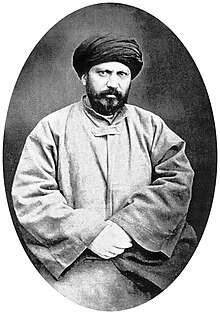
| Sayyid Jamaluddin al Afgani |
Para intelektual Muslim ini juga berpendapat, bahwa Sains Modern pada dasarnya adalah "Sains Muslim" yang telah dikembangkan semenjak lama di zaman Kekhalifahan Islam Umayyah dan Abbasiyyah, dan akhirnya ditransferkan ke dunia Barat di Spanyol abad ke-13, dan berkat penerjemahan karya sarjana muslimin ini terbukannya zaman Renaissance dan pencerahan di Barat).
Syarahan Bebas 2:
Roger Garaudy seorang intelektual Islam dari Perancis juga telah mengingatkan tentang sikap tidak seimbang Barat terhadap Islam, di dalam bukunya "Janji-janji Islam" beliau menunjukkan hutang yang besar dari kebudayaan Barat terhadap Islam. Ia mengingatkan hutang budi Barat kepada Islam yang tak putus-putusnya memberi bahan dan menyuburkan seni, filsafat, begitu juga sains, teknik hukum dan sastra.
 |
| Prof. Roger Garaudy |
George Sarton dalam jilid pertama bukunya yang terkenal Introduction to the History of Science menulis "Cukuplah kita sebut nama-nama besar yang tak tertandingi pada masa itu oleh Barat: Jabir ibnu Hayyan, Al-Kindi, Al-Khawarizmi, Al-Farghani, Ar-Razi, Tsabit ibn Qurrah, Al Battani, Al Farabi, Ibrahim ibn Sinan, Al-Mas'udi, At-Tabari, Abu Al-Wafa, Ali ibn Abbas, Abu Al-Qasim, Ibnu Al-Jazzar, Al-Biruni, Ibnu Sina, Ibnu Yunus, Al-Kashi, Ibnu Al-Haitsam, Ali ibn Musa Al-Ghazali, Umar Khayyam. Jika seseorang mengatakan pada anda bahwa abad pertengahan sama sekali steril dari kegiatan ilmiah, kutiplah nama-nama di atas. Mereka semua hidup dan berkarya dalam periode yang amat singkat dari 750 hingga 1100 M"
 |
| Goerge Sarton |
For the intellectuals who founded the "modernist" movement within
Islam, there is nothing wrong, in principle, with science. What remains
unacceptable, however, are the distortions imposed upon science by the
materialistic and positivist views held by Western philosophers and
antireligious scientists. Modern science could not emerge in the Muslim
world, even though it was quite advanced at a certain time, because of
"superstitions" that were added to the original religion and encouraged
quietist fatalism more than action. The result of this awakening of
consciousness as to the progressive slipping into torpor (jumu¯d ) of Islamic societies is the modernists' call for a renaissance (nahḍah ) through reform (Ịla¯̣ ) of Islamic thinking.
Terjemahan Bebas 3:
(Bagi kalangan Intelektual yang merintis gerakan "modernis" dalam Islam, tidak ada yang salah secara prinsip dengan sains. Tinggal yang tidak dapat diterima dari sains adalah penyimpangan sains oleh sudut pandang materialistik dan positivistik yang dianut oleh Pilosof barat dan kalangan Ilmuwan anti agama. Sains modern tidak dapat bangkit dalam dunia Muslim, meskipun pernah begitu sangat maju perkembangannya lebih karena berkembangnya "takhayyul" yang merupakan bid'ah dalam agama yang murni dan mendorong umat kepada sikap pasrah falistik ketimbang tindakan nyata. Hasil dari kebangkitan kesadaran ini terhadap ketergelinciran umat dalam kemandekan (jumud) adalah seruan untuk melakukan renaissance/kebangkitan kembali melalui reformasi (Ilaa) terhadapa pemikiran Islam. )
Muslim intellectuals who study relationships between science and
religion draw their ideas from Islam's epistemology. Indeed, Islamic
tradition emphasizes the search for "knowledge" ('ilm ), a word
that recurs more than four hundred times in the Qur'an and in many
prophetic traditions in such forms as "the search for knowledge is a
religious obligation," or "search for knowledge all the way to China."
This knowledge has three aspects: religious knowledge transmitted
through revelation, knowledge of the world acquired through
investigation and meditation, and knowledge of a spiritual nature
granted by God.
Terjemahan Bebas 4:
(Para Intelektual Muslim yang mengkaji hubungan antara sains dan agama mengambil ide-idenya dari epistemologi Islam. Sejatinya, tradisi Islam menekankan kepada pentingnya "pengetahuan" ('ilm), sebuah kata yang terus diulang tidak kurang empat ratus kali dalam Qur'an dan Hadist seperti "pencarian terhadap ilmu pengetahuan adalah kewajiban agama," atau "carilah ilmu walau ke negri Cina." Pengetahuan ini mempunyai tiga asfek: pengetahuan agama yang diperoleh melalui kewahyuan, pengetahuan tentang dunia yang diperoleh melalui penyelidikan dan perenungan, dan pengetahuan suci melalui petunjuk Tuhan.)
Different attitudes about the relationship between
science and religion proceed from the different emphases placed on those
three aspects. The word (âyât ) describes both God's signs in the cosmos and the verses in the Qur'anic text. Many passages, called "cosmic verses" (âyât kawniyyah
) by commentators, direct the reader's attention to nature's phenomena,
where the reader is to learn to decipher the creator's work. Islam's
fundamental perspective is to affirm divine uniqueness (tawḥd
), which ensures oneness of knowledge, insofar as all true knowledge
leads back to God. Therefore, there could not be disagreement between
data resulting from knowledge of the world and data delivered through
revelation, nor could there be the "double truth" (duplex veritas ) condemned in the Western medieval world and falsely attributed to Muslim philosophers.
Terjemahan Bebas 5:
(Perbedaan sikap dalam kaitan antara sains dan agama berkembang dari tiga aspek penekanan yang berbeda. Kata (ayat) yang menggambarkan tanda-tanda Tuhan di alam semesta dan ayat tersurat dalam Qur'an. Banyak ayat dalam alqur'an, oleh ahli tafsir disebut sebagai ayat alam semesta (ayat kawniyyah) mengarahkan perhatian para pembacanya terhadap kejadian-kejadian alam semesta, di mana para pembaca alQur'an dituntut menguraikan karya Tuhan di alam semesta. Sudut pandang fundamental Islam adalah penegasan terhadap keesaan (tauhid), yang menjamin ketunggalan dari pada pengetahuan itu sendiri, karena semua pengetahuan sejati yang benar akan kembali kepada Tuhan. Oleh karena itu tidak akan ada ketidaksesuaian antara pengetahuan yang diperoleh dari alam dan pengetahuan yang diperoleh dari jalan kewahyuan, juga tidak ada istilahnya apa yang disebut sebagai "kebenaran ganda" (duplex veritas) yang dikutuk oleh Barat di abad pertengahan dan secara keliru telah dituduh berasal dari Filosof Muslim. )
The fundamental idea of oneness of knowledge appears in the positions
of two major players in the history of Muslim thinking, whose works are
still very much read today. Abu¯ Ha¯mid al-Ghazâl (1058–1111), in The Deliverer from Error (al-Munqidh mini¯ aḍ - Ḍalâl ), champions that rational certitude is granted by divine gift. If there is disagreement between the results of falsafah
(philosophy and science of Hellenic inspiration) and the teachings of
religious tradition, it is because philosophers took their
investigations outside the domain of validity of their own fields, which
led them to enunciate flawed propositions. In the long test-case
opinion ( fatwá )—the format he used in his book, On the Harmony of Religion and Philosophy (Kita¯b Faṣl al-Maqa¯l )—Abu¯ al-Wali¯d Muhammad Ibn Rushd (1126–1198)
states that the practice of philosophy and of science is a canonical
religious obligation. For him, if there is apparent disagreement between
philosophy and revelation, then religious texts must be subjected to
interpretation (ta'wil ) or risk impiety by making God say
things that are manifestly false. Contemporary Muslim positions on
science fall into three main categories that keep to the idea, in one
way or another, of the oneness of knowledge
Terjemahan Bebas 6:
(Ide fundamental kesatuan pengetahuan tampaknya berada pada posisi-posisi dua tokoh utama Islam yang karya mereka masih dibaca hingga hari ini. Yang pertama adalah Abu Hamid al-Ghazali (1058-1111), dalam kitabnya pengantar dari kebingungan (al-Munqidh min ad-Dalal), di mana beliau memperjuangkan gagasan bahwa kepastian akal dijamin oleh karunia Ilahi. Jika ada ketidaksesuaian antara hasil filsafat (filsafat dan sains dari inspirasi Yunani) dan agama, hal ini disebabkan oleh filosof melakukan penyelidikan di luar wilayah validitas keilmuannya, sehingga mengarahkan mereka mengemukakan dalil-dalil cacat. Dalam fatwanya- yang merupakan format yang ia pakai dalam bukunya, Harmoni antara Agama dan Filsafat (Kitab Fasl al-Maqaal)- Abu al Waliid Muhammad Ibnu Rushd (1126-1198) menyatakan bahwa pengamalan filsafat dan sains adalah kewajiban agama. Bagi beliau, jika ada perbedaan antara filsafat dan kewahyuan, maka teks agama harus ditafsirkan (ta'wil) karena jika tidak ini hal yang berbahaya karena menjadikan tuhan mengungkapkan hal yang keliru. Posisi Muslim kontemporer terhadap sains termasuk ke dalam tiga kategori utama ini, yang dalam satu atau lain segi tetap mempertahankan ide tentang kesatuan pengetahuan. )
The majority position considers, in step with of the reformers of the
nineteenth and twentieth centuries, that there is nothing essentially
bad about science. The West, the current producer of scientific
discoveries, may be blamed only for its materialistic vision and its
indifference to morals. What this trend identifies as science are
essentially the natural sciences, not human sciences permeated with the
West's antireligious values. Science is considered as the means to
convey "facts" that are, in essence, totally neutral. What the West
lacks is the sense of ethics that some Western scientists exhibit
personally, but which is not visible enough or at all in Western
societies. Some great Muslim scientists, such as Mohammed Abdus Salam
(1926–1996),
who won the Nobel Prize in physics in 1979, have advocated the
development of modern science in the Muslim word. Such defenders of
science evoke the glorious hours of the great period of science in
Islam, invoke the long list of Muslim scientists whom "history forgot,"
and strive to build a future that promotes the emancipating role of
education.
(Mayoritas sikap yang diambil oleh para pembaharu muslim abad 19 dan 20 adalah, bahwa pada dasarnya secara esensial tidak ada yang buruk dengan sains. Dunia Barat, yang dewasa ini menghasilkan temuan-temuan saintifik, hanya boleh disalahkan atas visi materialistiknya serta penyimpangan moralnya. Apa yang diacu sebagai sains dalam trend para pembaharu ini adalah sains kealaman, bukan sains sosial karena sains sosial diapndang telah menyerap nilai-nilai anti agama Barat. Sains mereka pandang sebagai alat untuk menyampaikan "fakta" yang mana fakta tersebut sepenuhnya netral. Apa yang lemah dari Barat menurut kaum modernis muslim ini adalah kurangnya moralitas pribadi dari ilmuwan Barat tersebut, namun tidak kentara di tataran masyarakat Barat itu sendiri. Beberapa ilmuwan besar muslim, seperti Muhammad Abdus Salam (1926-1996), yang telah memenangkan hadiah nobel Fisika tahun 1979, telah mendukung pentingnya pengembangan sains modern di dunia muslim. Para pembela pandangan positif terhadap sains ini mendengung-dengungkan masa-masa kejayaan sains Islam, mengelu-elukan sejumlah ilmuwan muslim "yang terlupakan sejarah", dan bersikeras untuk membangun masa depan Islam yang mempromosikan peranan emansipasi pendidikan. )
This trend has enjoyed considerable growth, while being used, in some
fashion, for apologetic purposes. In 1976, Maurice Bucaille, a French
surgeon, released The Bible, the Qur'an, and Science, a study
of the scriptures "in light of modern knowledge," and concluded the
Qur'an to be authentic because of "the presence in the text of
scientific exposés
which, examined in our times, are a challenge to human analysis" (p.
255). The original intent was not to tackle the relationships between
science and religion in Islam but rather to take part in the debate
between contemporary Orientalists and Islamists on the status of the
Qur'an and to bring into the debate elements supporting its
authenticity. This idea of the "scientific evidence" of the truth of the
Qur'an spread through the Muslim world with the many translations of
Bucaille's work, and it became amplified to the point of being a major
force in contemporary Muslim apologetics, where the traditional theme of
"the inimitability of the Qur'an" (i'ja¯z al-qur'a¯n
) is fully reinterpreted from the perspective of "Qur'anic science."
Throughout, "Western scientists" identify in the Qur'an the latest
discoveries of modern science (cosmology, embryology, geophysics,
meteorology, biology), thereby affirming the truth of Islam. The
supporters of this position hold a concept of science that gives no
thought to its vision of the world, nor to its epistemological or
methodological presuppositions. Some go even further, when—calling on the scripture to deliver quantitative scientific information, such as the very precise measure of the speed of light—they claim to be founding an "Islamic science" on entirely new methods. But, as physicist Pervez Hoodbhoy points out in his Islam and Science (1991), which takes a stand against such diversion, "specifying a set of moral and theological principles—no matter how elevated—does
not permit one to build a new science from scratch" (p.78). There is
only one way to make science, and "Islamic science" of the glorious past
was nothing but universal science being practiced by scientists
belonging to the Arab-Islamic civilization.
(Kecendrungan sikap ini terus berkembang, mana kala kencendrungan ini dimanfaatkan dengan berbagai cara demi tujuan memberikan alasan apologetik atas kemunduran Islam. Pada tahun 1976, Maurice Bucaille, seorang ahli bedah Perancis merilis bukunya yang berjudul Bibel, Qur'an dan Sains Moderns , kajian kitab suci dalam sorotan sains modern. Bucaille menyimpulkan bahwa Qur'an otentik karena di dalam alquran mengandung muatan sains modern yang di analisa menurut zaman kita adalah suatu tantangan mukjizati. Tujuan mendasar adalah bukan untuk mengatasi kaitan antara sains dan agama di dalam Islam, namun agaknya untuk untuk ambil bagian dalam debat antara Orientalis Kontemporer dan Islamis tentang status Qur'an serta mengangkat perdebatan soal unsur-unsur yang mendukung nilai otentik dari al Qur'an.)
View of the presuppositions of modern science
The second trend rejects this idea of universal science and
emphasizes the necessity of examining the epistemological and
methodological presuppositions of modern science of Western origin.
These presuppositions may not be accepted by the Muslim world. This
trend has its roots in critics from philosophy and history of science.
Karl Popper (1902
–1994), Thomas Kuhn (1922
–1996), and Paul Feyerabend (1924
–1994)
contributed, each in his way, to questioning the notion of scientific
truth, the nature of experimental methods, and the independence of
science's productions with regard to the cultural and social environment
in which they appear. In a climate heavily influenced by the relativism
and antirealism of postmodern deconstruction, Muslim critics of Western
science reject the idea that there is only one way to pursue science.
They strive to define founding principles for an "Islamic science" by
planting scientific knowledge and technological activity in the ideas of
Islamic tradition and the values of religious law (
shari¯'ah ), but with nuances that result from differences of interpretation.
That is how Isma'il Raji Al-Faruqi (1921
–1986) elaborated a program of Islamization of knowledge, carried out with the creation in 1981 in Herndon, Virginia, of the
International Institute of Islamic Thought
(IIIT), in response to the experiences and the thinking of Muslims
working in North American universities and research institutes. This
program is based on the observation of a malaise within the Muslim
community (
ummah ), which originates in the importation of a
vision of the world totally foreign to the Muslim perspective. For the
IIIT, the Islamization of knowledge is all encompassing: It starts with
God's word, which can and must apply to all areas of human activity,
since God created man as his "representative" or "vice-regent on Earth" (
khalifa¯t Alla'h fi¯ al-ard
). The IIIT's work leads to the conception of a project for the
development of a scientific practice at the heart of a religious vision
of the world and of society. In fact, the IIIT's undertaking aims more
at the social sciences than at the natural sciences, which are
considered to be more neutral from the standpoint of methodology.
Other intellectuals, such as Ziauddin Sardar (1951
–) and the members of the more or less informal school of thought known as
ijma¯li¯
(selfdesignated in this fashion in reference to the "synthetic" vision
it offers), are also aware of the threat that the West's vision of the
world, as it is conveyed by science, represents for Islam. Deeply
influenced by Kuhn's analysis of scientific development, they note that
Western science and technology are not neutral activities but partake of
a cultural project and become a tool for the dissemination of the
West's ideological, political, and economic interests. To import modern
science and technology into Islam, one needs to rebuild the
epistemological foundations of science, keeping in mind the perspective
of interconnections between the various domains of human life
—a perspective that is peculiar to Islam. Sardar himself has compared the ijmalis' position to al-Ghaza
¯li
¯'s.
Assessment of the metaphysical foundations of science
The third trend in Islamic thought is characterized by a deep
assessment of the metaphysical foundations that support the vision of
the world suggested by Islamic tradition. Seyyed Hossein Nasr (1933
–)
is its most important proponent. He has been a champion of a return to
the notion of "Sacred Science." This trend originates in the criticism
of the modern world put forth by French metaphysicist Ren
é Gu
énon (1886
–1951), and later by authors in his wake, such as Frithjof Schuon (1907
–1994) and Titus Burckhardt (1908
–1984), all Muslims of Western origin. Gu
énon
explained how modern Western civilization is an anomaly insofar as it
is the only civilization in the world that developed without reference
to transcendence. Gu
énon
mentions the universal teaching of humanity's religions and traditions,
all of which are nothing but adaptations of the original
—essentially metaphysical
—tradition.
The destiny of human beings is the intellectual knowledge of eternal
truths, not the exploration of the quantitative aspects of the cosmos.
In this context, Nasr denounces not so much the malaise of the Muslim
community, but rather that of Western societies that are obsessed with
developing a scientific knowledge anchored in a quantitative approach to
reality and in the domination of nature, which results in its pure and
simple destruction.
Nasr's position and that of the other defenders of this traditional trend
—which some chose to call
perennialist (in reference to
Sophia perennis, the "eternal wisdom" of divine origin, which they perpetuate)
—inscribes
itself not only in the critique of Western epistemology, but in a deep
calling into question of the Western idea of a reality reduced to matter
alone. The perennialists propose a doctrine of knowledge as a
succession of epiphanies, where truth and beauty appear as complementary
aspects of the same ultimate reality. They call for a return to a
spiritual view of the world and the rehabilitation of a traditional
"Islamic science," which would preserve the harmony of the being within
creation. In contrast, critics of such a radical position denounce its
elitism and emphasize the difficulty of implementing its program in
current circumstances.
The various currents within contemporary Muslim thinking are evidence
of the intense questioning of the relationship between science and
religion. In this context, the Muslim academic world has been operating
as a kind of melting pot, where numerous ideas of Islamic or Western
origin are elaborated anew in an effort to synthesize them. The
fundamental elements remain true to Islamic thinking: the repeated
affirmation of God's uniqueness, which unites both creation and
humanity; the open nature of the very process of acquisition of
knowledge of the world, which, by essence, is unlimited since it
originates and ends in the knowledge of God; the narrow interconnection
of knowledge and ethics; and, finally, the responsibility of human
beings on Earth in their capacity as vice-regents, who must use the
world but not abuse it and behave as good gardeners must in their
garden. In addition, the metaphysics underlying epistemology and ethics
is deeply marked by the dialectic of the visible and of the invisible.
Phenomena are the signs of divine action in the cosmos. In fact, God is
present in the world, the creation of which God ceaselessly "renews" at
every moment (
tajdi¯d al-khalq ). The articulation of this form of "opportunism" with causality
—and modern science's determinism and indeterminism
—remains to be elaborated.
Critical thinking on the very elaboration of science as an activity
marked by culture is now part of the discourse. In contrast, one must
acknowledge that the latest developments in contemporary science
—notably
those dealing with mathematical undecidability, the uncertainty of
quantum physics, the unpredictability of chaos theory, as well as the
questioning by biology of evolution, and by neuroscience of conscience
—need,
no doubt, some further thinking. Indeed, these developments may provide
interesting ways to shatter the reductionist and scientist view of the
world. They constitute a kind of cornerstone for a metaphysics and
epistemology that could give meaning to science as it is done in
laboratories and research institutes.
Finally, one has to provide content to the term
Islamic science. The issue is simultaneously one of ethics (personal and collective), of epistemology, and of the metaphysical
Weltanschauung
it presupposes. When passing from theory to practice, each current of
thought must face specific problems resulting not only from its specific
position but also from the Muslim world's economic and social
difficulties. What remains to be established is the degree to which the
most ambitious project
—that of Islamic science as Sacred Science
—can
amount to more than a nostalgic glance at the past and move on to the
stage of its actual implementation by a spiritual and intellectual
elite. The future of the Islamic civilization's contribution to the
development of universal knowledge is tied to the answer that will be
given to that question.
See also AverroËs;
Avicenna;
Islam;
Islam, History of Science and Religion
Bibliography
acikgenc, alparslan. islamic science: towards a definition. kuala
lumpur, malaysia: international institute of islamic thought and
civilization, 1996.
al-afghani, jamal-al-din. "refutation of the materialists." in an
islamic response to imperialism, political and religious writings of
sayyid jam
âl-al-d
în al-afgh
ân
î, ed. and trans. nikki r. keddie. berkeley: university of california press, 1982.
al-attas, seyd muhammed naquib. prelegomena to the metaphysics of
islam: an exposition of the fundamental elements of the worldview of
islam. kuala lumpur, malaysia: international institute of islamic
thought and civilization, 1995.
al-faruqi, isma'il raji, ed. islamization of knowledge: general
principles and work plan. washington, d.c.: international institute of
islamic thought, 1982.
al-ghaza
¯li
¯, abu
¯ ha
¯mid. al-munqidh min ad
̣-d
̣ala
¯l (freedom and fulfillment), trans. and ed. r. mccarthy. boston: twayne, 1980.
arkoun mohammed. "le concept de raison islamique." in pour une
critique de la raison islamique. paris: maisonneuve et larose, 1984.
bakar, osman. tawhid and science: essays on the history and
philosophy of islamic science. kuala lumpur, malaysia: secretariat for
islamic philosophy and science, 1991.
bucaille, maurice. la bible, le coran, et la science: les
Écritures saintes examin
ées
à la lumi
ère
des connaissances modernes. paris: seghers, 1976. available in english
as the bible, the qur'an, and science: the holy scripture examined in
the light of modern science, trans. alastair d. pannell and the author.
indianapolis, ind.: american trust, 1979.
butt, nasim. science and muslim societies. london: grey seal, 1991.
gu
énon, ren
é. le r
ègne de la quantit
é
et les signes des temps. paris: gallimard, 1945. available in english
as the reign of quantity and the signs of the times, trans. lord
northbourne. london and baltimore, md.: penguin, 1953.
hoodbhoy, pervez. islam and science: religious orthodoxy and the battle for rationality. london: zed books, 1991.
hourani, albert. arabic thought in the liberal age: 1798
–1939. cambridge, uk: cambridge university press, 1983.
ibn rushd (averro
ës). on the harmony of religion and philosophy (kita
¯b fass
̣l al-maqa
¯l wa taqri
¯r ma
¯ bayna ash-shari
¯'ah wa al-hikmah min al-ittis
̣a
¯l), ed. and trans. george hourani. london, luzac, 1976.
lewis, bernard. the muslim discovery of europe. new york: norton, 1982.
modh nor wan daud, wan. the concept of knowledge is islam. london: mansell, 1989.
nasr, seyyed hossein. science and civilization in islam, 2nd edition. cambridge, uk: islamic texts society, 1987.
nasr, seyyed hossein. the need for a sacred science. albany: state university of new york press, 1993.
salam, mohammed abdus. ideals and realities: selected essays of abdus salam, ed. c. h. lai. singapore: world scientific, 1987.
sardar, ziauddin. explorations in islamic science. london: mansell, 1989.
sardar, ziauddin. islamic futures: the shape of ideas to come. london: mansell, 1985.
sardar, ziauddin, ed. an early crescent: the future of knowledge and the environment in islam. london: mansell, 1989.
stenberg, leif. the islamization of science: four muslim positions
developing an islamic modernity. lund, sweden: lunds universitet, 1996.
bruno guiderdoni